5 Reasons You Love Each Other but Feel Unhappy in Your Relationship and How to Reconnect

When Love Is Present but Relationship Happiness Is Missing
It is possible to love your partner and still feel unhappy in the relationship. That experience can be confusing, especially when nothing is obviously “wrong.” There may be no betrayal, no major conflict, and no clear reason the relationship should feel difficult. Yet something feels different, heavier, more distant, or quietly unsatisfying.
Many people find themselves searching questions like “Why am I unhappy in my relationship but still in love?” or “How can we love each other but something still feels off?” These questions often arise when a relationship no longer feels as connected or fulfilling as it once did, even though the love between partners is still present.
For many couples, this realization brings a mix of guilt, worry, and uncertainty. Love is there, but the sense of closeness or emotional ease that once defined the relationship may feel harder to access.
“I love my partner. I just do not feel connected anymore.”
Experiences like this are more common than many couples realize. They often lead people to begin exploring whether support, reflection, or relationship counseling could help them better understand what has changed and what might help the relationship feel stronger again.

Why This Happens in Healthy, Committed Relationships
It can be unsettling to feel dissatisfied when there is still loyalty, shared history, and genuine care. Many people assume that relationship unhappiness must mean incompatibility or failure. In reality, emotional disconnection often develops in stable, long term relationships that simply lack intentional repair and growth.
Love is an emotional bond. Happiness in a relationship depends on several additional factors:
Emotional responsiveness
Effective conflict resolution
Shared meaning and direction
Psychological safety
Ongoing personal and relational growth
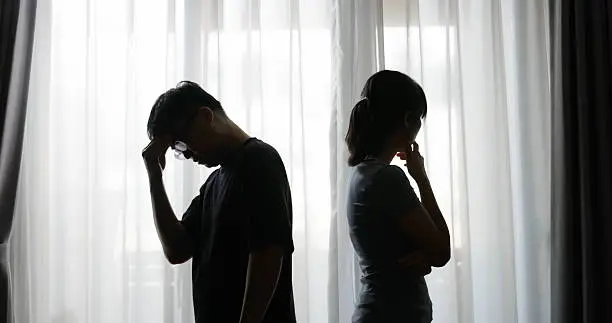
When even one of these areas weakens, relationship satisfaction can decline while love remains intact. Understanding this distinction reduces shame. It also opens the door to change. Rather than asking, “Is something wrong with us?” a more productive question becomes, “What is happening beneath the surface of our connection?”
With that perspective in mind, let us explore the most common patterns that contribute to feeling unhappy despite still being in love.

1. Emotional Disconnection Has Gradually Replaced Emotional Intimacy
Emotional disconnection rarely happens suddenly. It builds over time through missed conversations, unresolved stress, and unspoken needs. Couples may still function well, they parent effectively, they manage responsibilities; but emotional intimacy quietly decreases.
Signs of emotional disconnection in a relationship often include:
Conversations that stay logistical instead of personal
Feeling unheard or misunderstood
Reduced affection or warmth
Avoiding vulnerable topics
Feeling lonely while physically together
Disconnection is not a sign that love is gone, it is a signal that emotional engagement has weakened. Rebuilding connection requires intentional vulnerability, not just shared routines. As emotional intimacy declines, unresolved issues tend to surface next.
2. Unresolved Resentment Is Affecting Relationship Satisfaction
Resentment in relationships rarely appears all at once. More often, it develops gradually when small disappointments, unmet expectations, or emotional hurts are minimized or left unaddressed. Over time, these experiences accumulate, subtly shaping how partners interpret each other’s words, actions, and intentions.
You may begin to notice irritation that feels stronger than the situation itself, or emotional withdrawal that feels like a form of self-protection. While the relationship may still contain love and commitment, unresolved resentment can quietly reduce overall relationship satisfaction and emotional safety.
Common sources of resentment include:
Repeated unmet needs
Conflict that never reaches resolution
Feeling unappreciated
Emotional invalidation
Imbalanced responsibilities
When resentment remains unprocessed, partners often find themselves reacting to layers of past hurt rather than the present moment. Disagreements can escalate quickly because they carry emotional history that has never been fully acknowledged or resolved.
Relationship counseling frequently focuses on helping couples identify and work through these underlying patterns rather than continuing to circle the same surface-level conflicts. As resentment builds, ongoing life stress can further intensify emotional distance and strain the relationship’s sense of stability.

3. Chronic Stress Is Reducing Emotional Availability
External stress plays a significant role in relationship satisfaction. Pressures from work, parenting responsibilities, financial strain, and health concerns can gradually reduce the emotional energy partners have available for each other. Even when love remains strong, chronic stress can make connection feel more difficult to access.
When the nervous system stays in a prolonged state of stress, patience and emotional responsiveness tend to decrease. Partners may still care deeply for one another, but daily interactions can begin to feel more transactional than emotionally supportive.
You might observe:
Shorter conversations
Increased irritability
Decreased sexual intimacy
More practical communication and less emotional connection
Over time, unmanaged stress can quietly shift a relationship toward functioning rather than connecting. Without intentional efforts to regulate stress and create moments of reconnection, couples may find themselves living increasingly parallel lives. This dynamic often overlaps with deeper relational patterns, including how each partner responds to closeness and vulnerability.
4. Attachment Patterns Are Creating a Repeating Cycle
In my work providing couples therapy and relationship counseling, I often use Emotionally Focused Therapy, also known as EFT. Emotionally Focused Therapy is grounded in attachment science. It helps couples understand how emotional bonding patterns shape conflict and disconnection.
Many unhappy but loving couples fall into predictable cycles:
One partner pursues connection through criticism or urgency
The other withdraws to avoid escalation
Both partners feel rejected
Neither feels emotionally safe
The issue is rarely the surface argument. The deeper issue is the attachment fear beneath it. EFT helps couples slow down these patterns and express vulnerability without accusation. When partners learn to respond to each other’s underlying fears instead of reacting defensively, emotional safety increases. As safety increases, relationship satisfaction often follows. Once the cycle is understood, couples are better positioned to focus on growth.
“When couples shift from blaming each other to identifying their negative cycle, progress accelerates. The cycle becomes the problem, not the partner.”

5. The Relationship Has Stopped Intentionally Growing
Healthy relationships tend to evolve over time. When that sense of growth slows or stops, couples may begin to experience a subtle but persistent dissatisfaction. The relationship may still feel stable and committed, yet emotionally stagnant or routine. This does not necessarily mean the relationship is failing. In many cases, it signals that the relationship needs renewal through shared effort, new experiences, and intentional attention to how partners connect and communicate.
Couples who feel stuck often benefit from:
Shared activities that build positive experiences
Structured couples communication exercises
Revisiting long term goals
Learning conflict resolution skills
Individual therapy to address personal triggers
Growth helps create forward momentum within a relationship. Without it, even loving and stable partnerships can begin to feel emotionally flat over time. Relationship therapy can provide a supportive and structured environment where couples intentionally reintroduce growth rather than waiting for larger problems to force change.

Can a Relationship Be Saved If You Love Each Other but Feel Unhappy?
This is one of the most common questions explored in couples counseling. Feeling unhappy in a relationship while still loving your partner can create significant confusion, but it does not automatically mean the relationship is beyond repair.
In many cases, relationships improve when both partners become willing to examine long-standing patterns, increase emotional awareness, and approach conflict in new ways. Small shifts in communication, responsiveness, and empathy can gradually rebuild trust and emotional closeness. Love alone does not resolve relational strain, but it often provides the motivation needed for meaningful change.
Healthy relationships are sustained not just by affection, but by consistent emotional responsiveness: how partners listen, respond, and reconnect after tension or misunderstanding. When couples begin practicing these skills intentionally, relationship satisfaction often increases over time.
Research consistently shows that couples who learn to repair conflict effectively report higher long-term relationship satisfaction than couples who simply avoid conflict. The presence of conflict is not the issue; the ability to repair is.

The strength of a relationship is not measured by how rarely couples argue, but by how safely and effectively they reconnect afterward.
When to Seek Relationship Counseling
Even in loving relationships, couples sometimes encounter patterns that create confusion, frustration, or emotional distance. Seeking professional support can provide guidance and clarity before challenges escalate or routines of disconnection become entrenched. Counseling is not only for crises; it can help partners understand underlying dynamics and build tools to strengthen connection.
You may benefit from professional support if:
You feel emotionally distant but do not want to separate
The same arguments repeat without resolution
You are questioning your relationship but still care deeply
You feel lonely in your partnership
You want clarity before making major decisions
Virtual relationship therapy allows couples and individuals to explore these concerns in a structured, confidential setting. By providing a safe space to slow down reactive patterns and examine what is happening beneath the surface, counseling can help partners reconnect, improve communication, and regain a sense of emotional closeness.

Rebuilding Connection Starts with Understanding
Loving someone while feeling unhappy does not mean your relationship is beyond repair. Often, it signals that the partnership needs new skills, deeper emotional engagement, and intentional growth to restore closeness and satisfaction.
If you are considering couples therapy, marriage counseling, or individual relationship support, you do not have to face these challenges alone. Reconnection becomes possible when both partners are willing to understand recurring patterns, address underlying resentment, and rebuild emotional safety.
Taking the first step to explore what is happening in your relationship can open the door to meaningful change. Scheduling a consultation today may shift the direction of your partnership in ways you might not expect.